

Bosnia and Herzegovina is still one of Europe's most underrated countries, yet within a two-hour drive you get Ottoman bazaars, Austro-Hungarian facades, mountain canyons and a waterfall crashing right through a town center. In short, here is what to see in Bosnia and Herzegovina: Sarajevo with its Baščaršija quarter, Mostar and the Old Bridge, the Kravice waterfalls, the dervish monastery at Blagaj, the vizier town of Travnik and Jajce with its 20-meter waterfall. Five or six days cover all of it, and your budget will run noticeably lower than in neighboring Croatia.
Sarajevo: Baščaršija and a city where worlds meet
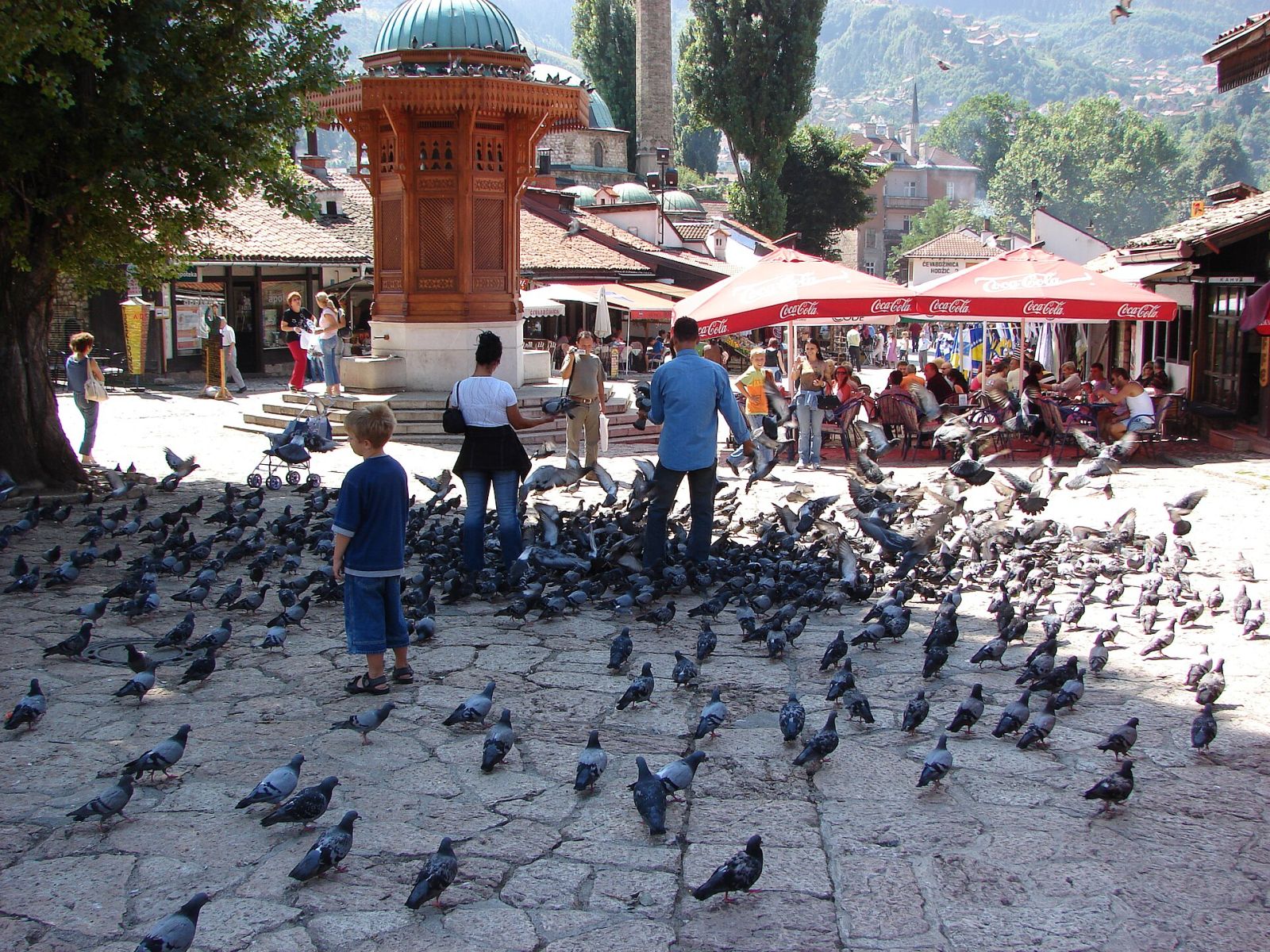
The capital is often called the Jerusalem of Europe, and for once the big comparison is honest: a mosque, a Catholic cathedral, an Orthodox church and a synagogue all stand within a few hundred meters of each other. The heart of the old town, Baščaršija, is a 15th-century Ottoman bazaar quarter. The meeting point is the wooden Sebilj fountain on the pigeon-filled square, with craftsmen's lanes fanning out around it: on Kazandžiluk street coppersmiths still hammer out džezva coffee pots by hand, and you can hear the tapping from the open workshops.
The essential stops nearby: the 16th-century Gazi Husrev-beg Mosque with its courtyard fountain, the covered Brusa Bezistan market and the Latin Bridge, where Archduke Franz Ferdinand was assassinated in 1914. One small detail that is easy to miss: a line embedded in the pavement of Ferhadija street reads Sarajevo meeting of cultures. Stand on it and you literally watch the Ottoman town stop and the Austro-Hungarian one begin.
Two experiences beyond the old town deserve their own slot. First, the Tunnel of Hope near the airport, dug under the runway in 1993 while the city endured a siege of nearly four years. The museum is small but hits harder than any textbook. Second, the cable car up Mount Trebević: at the top sits the abandoned 1984 Olympic bobsled track, now covered in graffiti, along with the best panoramas of the valley. A free sunset alternative is the Yellow Bastion, ten minutes on foot from Baščaršija.
Mostar and the Old Bridge: why everyone heads to Herzegovina
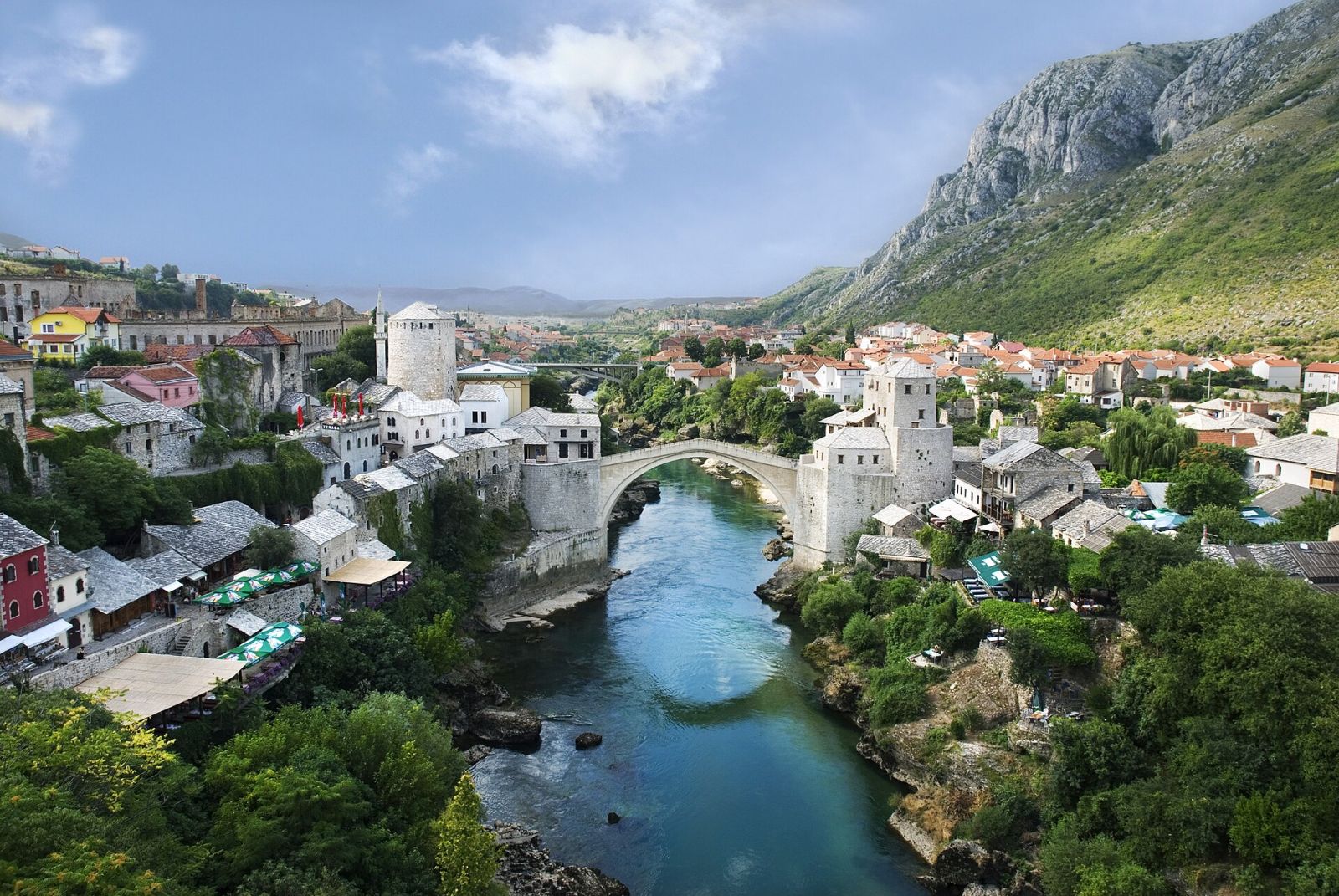
The stone arch over the turquoise Neretva, built by the Ottoman architect Hayruddin in 1566, stood for 427 years, was destroyed in November 1993 and rebuilt from the same local stone by 2004. Today Stari Most is UNESCO-listed, and the main local entertainment has not changed in centuries: diving off the bridge into the river from about 24 meters up. Members of the local diving club collect money from the crowd and jump several times a day, and every July the town hosts an official competition with roots going back to the 17th century.
An honest warning: at midday in season Mostar is swamped by tour groups from the Croatian coast. The magic switches on before 10 a.m. and after 6 p.m., once the buses leave, so it pays to sleep in Mostar rather than dash through for two hours. Beyond the bridge itself, wander the Kujundžiluk quarter with its old workshops, look at the miniature Crooked Bridge where Hayruddin supposedly rehearsed before the main build, and climb the minaret of the Koski Mehmed Pasha Mosque: that is where the classic postcard shot of the bridge is taken.
Kravice waterfalls: the Balkan answer to the tropics
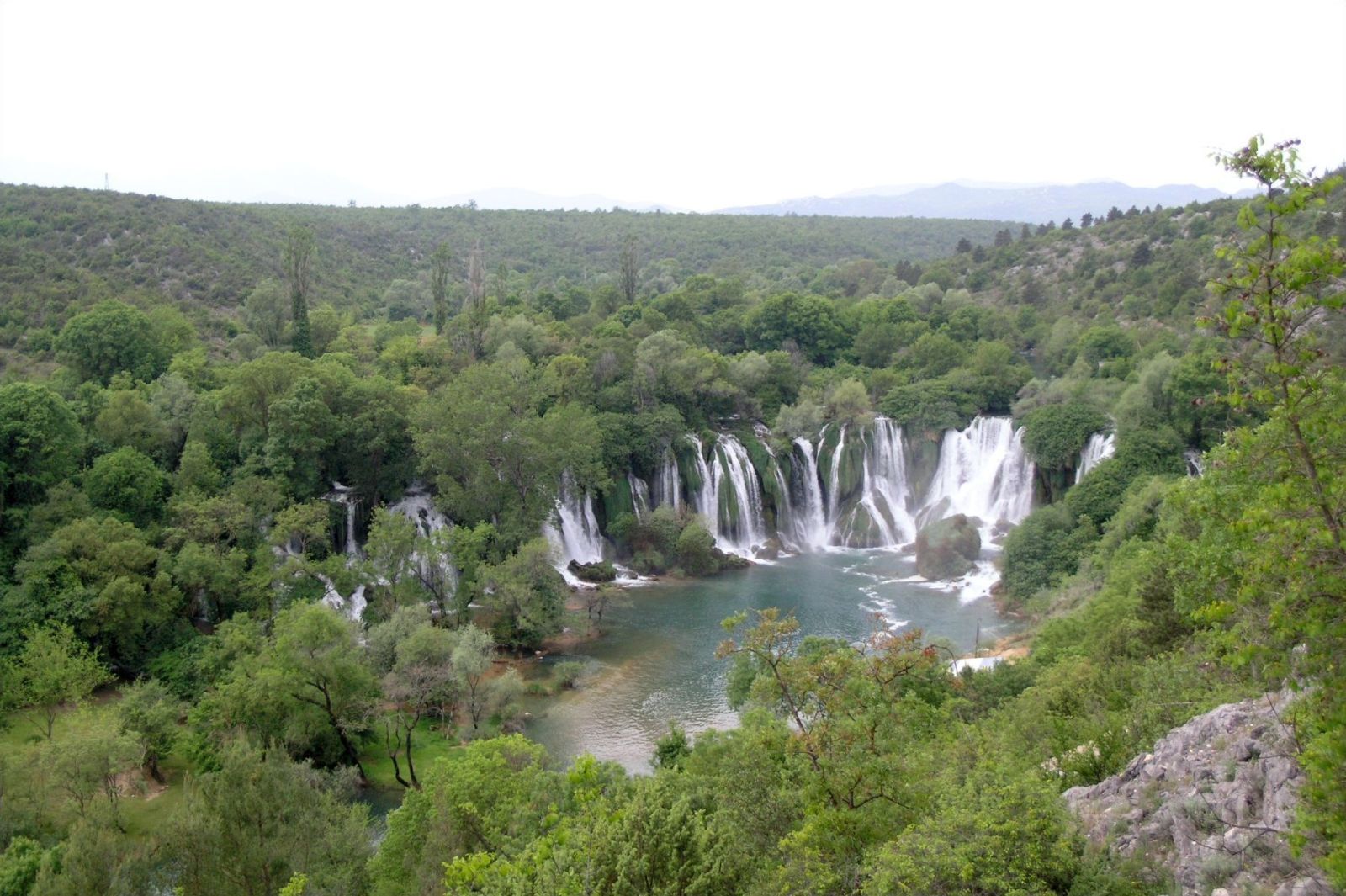
Forty kilometers from Mostar, the Trebižat river drops about 25 meters in an arc more than a hundred meters wide. There are dozens of falls here, spilling down green terraces into a broad lake where swimming is officially allowed in summer. The water is brisk even in August, but paddling under a wall of falling water beats any water park. The setup is simple: a ticket booth at the entrance, a few cafes by the water, boat rental. Come in the morning before the tour groups arrive; in spring the falls are at their fullest.
Blagaj and the tekke under the cliff
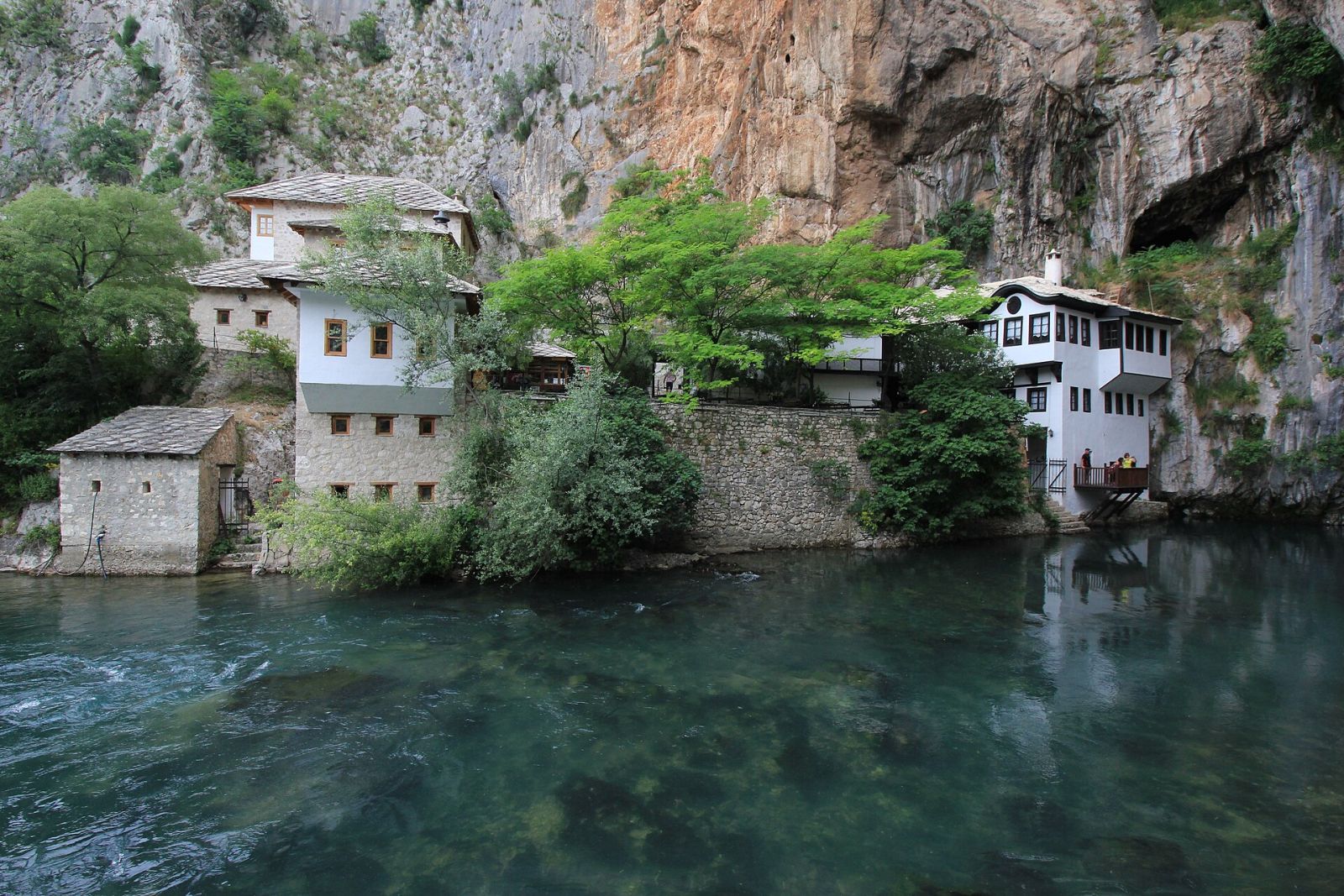
Half an hour from Mostar, the Buna river bursts out of a cave beneath a 200-meter vertical cliff. The spring ranks among the most powerful in Europe, and right at the water's mouth dervishes built a tekke, a lodge for spiritual practice, back in the 16th century. The white house with wooden balconies above emerald water looks almost painted. Entry costs a token fee, and women are handed headscarves at the door. Two tips: try the trout in the little restaurants over the water, and take the path to the opposite bank, because the best view of the tekke opens from there.
Travnik: town of viziers and Ivo Andrić
Between Sarajevo and Jajce lies Travnik, the seat of Bosnia's Ottoman viziers in the 18th and 19th centuries. A well-preserved medieval fortress rises above the town with views over the whole Lašva valley, and down below look for the Sulejmanija, known as the Many-Colored Mosque for its painted facades, and the Plava Voda spring: an icy stream, cafe tables set right over the water, grilled trout on every menu. Travnik is also the birthplace of Nobel laureate Ivo Andrić, and his house museum recreates a Bosnian interior of his era. The clinching gastronomic argument: local Travnik cheese and ćevapi that Bosnians themselves rank among the best in the country.
Jajce: a waterfall in the town center
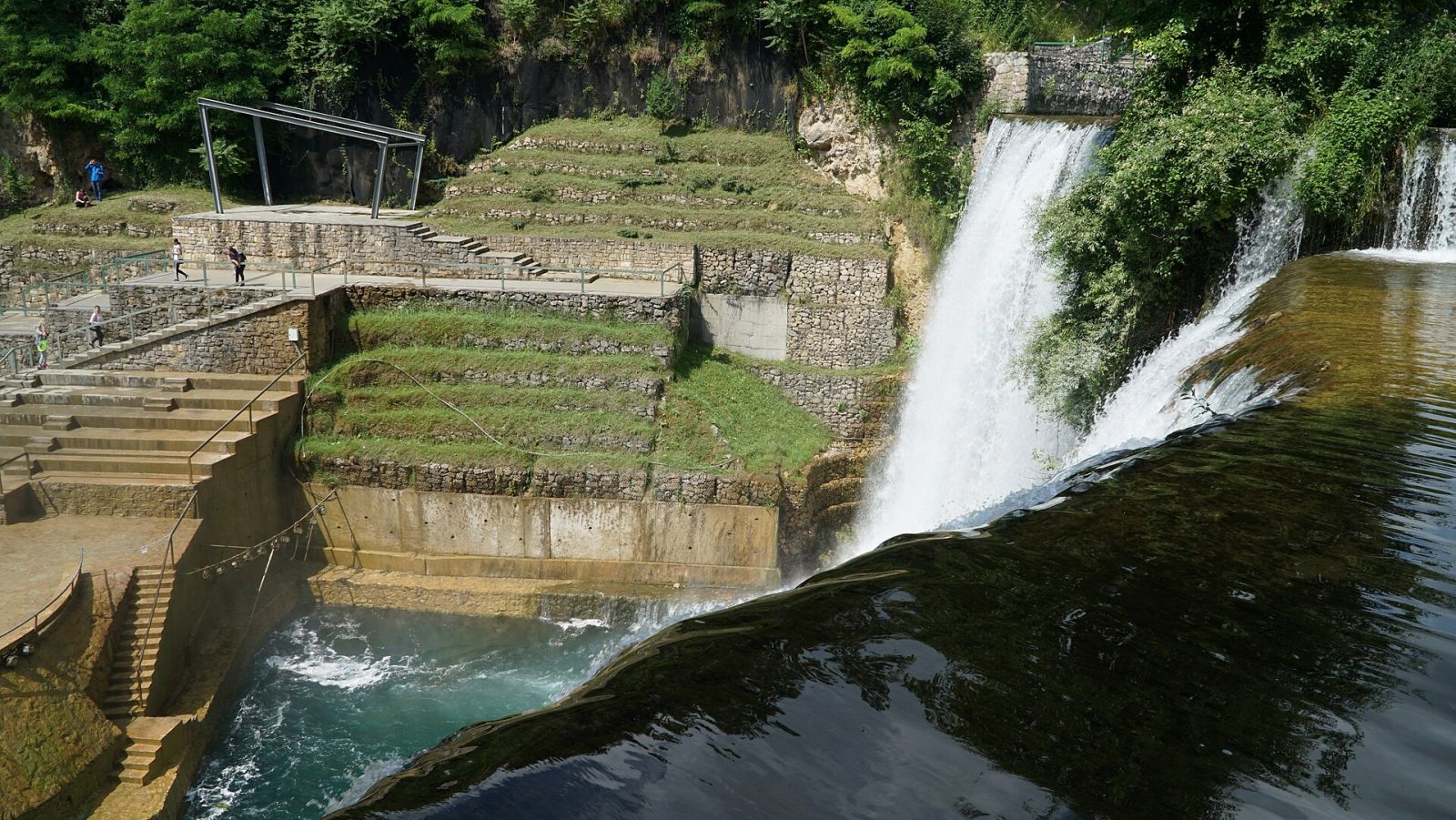
Jajce is one of the most striking small towns in the Balkans. The Pliva river plunges in a 20-meter waterfall exactly where it joins the Vrbas, all of it in the town center beneath the old walls, with a fortress crowning the hill above. The last Bosnian king was crowned in Jajce, and in 1943 the AVNOJ assembly here laid the foundations of socialist Yugoslavia, so the town reads like a digest of the whole country's history. A few kilometers upstream sit the Pliva lakes with a cluster of 19th-century wooden watermills called mlinčići: some twenty little huts on stilts over the channels, free to visit and nearly empty.
How to plan the route?
Logistics are simple: Sarajevo and Mostar are linked by one of Europe's most scenic railways through the Neretva canyon, and the remaining stops are easiest by bus or rental car.
| Place | Time needed | Why go |
|---|---|---|
| Sarajevo | 2 days | Baščaršija, Tunnel of Hope, Trebević |
| Mostar | 1 day with overnight | The Old Bridge without crowds, morning and evening |
| Kravice and Blagaj | 1 day | Swimming under the falls, the tekke on the Buna |
| Travnik | half a day | Fortress, Plava Voda, ćevapi and cheese |
| Jajce | half a day or overnight | Pliva waterfall, watermills, fortress |
Five days is the minimum for the country. A week covers everything on the list at a calm pace, with room for a day trip to the Bjelašnica mountains or rafting on the Neretva.
When to go and what to keep in mind?
The best windows are May-June and September to early October, when it is warm, green and the Kravice falls still run full. July and August in Herzegovina are scorching, with Mostar regularly topping 35 degrees Celsius, though Sarajevo up in the mountains handles the heat better. Many nationalities, Ukrainians included, enter visa-free with a biometric passport for short stays; check current entry rules before booking on an official source such as the Ministry of Foreign Affairs of Bosnia and Herzegovina. The currency, the convertible mark, is hard-pegged to the euro, and while many places accept euro cash, small purchases are easier in marks. One last thing: remote areas off the beaten path still hold landmines left from the war, so stick to marked trails in the mountains and stay out of abandoned buildings. The tourist spots listed above carry no such risk, and you now know what to see in Bosnia better than most guides.