

Scotland remains one of the finest travel destinations in the world. Its breathtaking scenery is a heady blend of towering mountains, wild forests and untouched beaches.
And Scotland's turbulent history reads like real, flesh-and-blood episodes of Game of Thrones.
No visit to Scotland is truly complete unless you dive into its captivating past, and what better way to do that than through the country's most famous battlefields. In an era when Scotland is once again asserting its nationhood, tracing the history of its battles, from Stirling Bridge in 1297 to Culloden in 1746, shows just how hard-won that identity really was.
Partner links: booking through them supports the blog at no extra cost to you.
Stirling Bridge, 1297
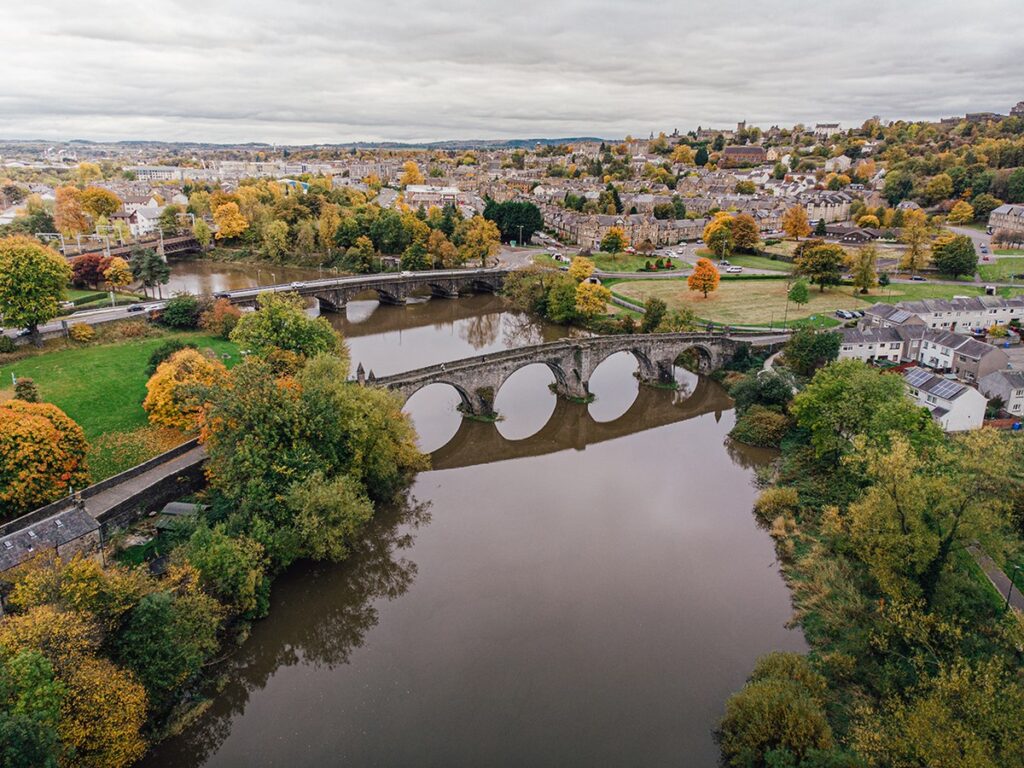
Fans of Mel Gibson's film Braveheart know Stirling as the first great victory of the rebel Scottish landowner William Wallace over the armies of Edward "Longshanks" I of England. But you may not have known that Wallace shared command with Andrew Murray (no, not that one!). Murray, or Moray, was the head of a powerful Scottish family that had raised the banner of rebellion the year before.
The victory at Stirling arguably belonged more to Murray than to Wallace, yet he never had the chance to savour it, suffering a mortal wound and dying soon afterwards.
Murray gets no mention in Braveheart, but that is far from the film's funniest omission.
The masterstroke that won the Scots the day at Stirling was a piece of tactics: wait until the vanguard of the English army had crossed the narrow wooden bridge, then surge forward, trap them and cut them to pieces. The English commander ordered the bridge destroyed, condemning half his own army to oblivion.
In Braveheart the battle is won thanks to the convenient invention of the schiltron (a cluster of spears) to fend off cavalry. In reality, schiltrons had already existed for centuries. And Stirling in the film? Not a bridge in sight.
Today
The best place to take in the landscape around Stirling is the climb up the Wallace Monument, a 19th-century tower commemorating the Guardian of Scotland, a title Murray also held before fading into the past.
In recent years, history lovers have campaigned for wider recognition of Andrew Murray, and a new memorial is now in the works at Stirling. Once finished, this monument will depict Wallace and Murray standing side by side in victory. Most of the battlefield now lies buried beneath modern Stirling.
Visitors to the magnificent Stirling Castle will be rewarded with a stunning view of the Wallace Monument set against heather-clad hills.
How to find it: Stirling Bridge is an hour's drive west of Edinburgh along the M9. You can reach it in an hour from Glasgow Airport.
Falkirk, 1298
After a full year of waging offensive war against an ever-growing English army, the Scots stood firm. Wallace wanted to mount a night raid, but he was overruled: the battle was to be fought in the open, in broad daylight. Wallace took up a defensive position and arranged his pikemen, archers and knights.
The English mounted knights charged, driving off the Scottish horse but failing to break through the four huge schiltrons of foot soldiers.
In Braveheart the Scots lose because some of their nobles (including Robert the Bruce himself) betray Wallace. The truth turns out to be more prosaic: isolated and unable to flee, the schiltrons were riddled with English arrows until they crumbled apart.
Wallace fled, resigned his post as Guardian of Scotland and all but vanished from the historical record until his capture in 1305. After his trial that August he was executed (by contemporary accounts, dragged naked behind a horse, then hanged, drawn and quartered) in a manner the film portrays very tamely indeed.
Today
Nobody knows for certain where the Battle of Falkirk took place: countless sites have been proposed around the modern town, which sits halfway between Edinburgh and Glasgow.
Future archaeological digs may yet uncover the remains of the battle, but for now it remains a mystery.
Beyond hunting for arrowheads, the best reasons to visit the town today are the marvel of engineering known as the Falkirk Wheel and the Falkirk Kelpies: mythical beasts turned into award-winning sculptures.
How to find it: Falkirk is an hour's drive west of Edinburgh along the M9, and it is easy to reach from both Edinburgh and Glasgow airports.
Bannockburn, 1314
After Wallace's defeat at Falkirk, the title of Guardian of Scotland passed to Robert the Bruce, who in 1306 was crowned King of Scots.
Despite (or perhaps because of) this show of national solidarity, the English kept pressing their claim to overlordship. Robert switched to guerrilla tactics, biding his time until the conditions were right to meet the English face to face.
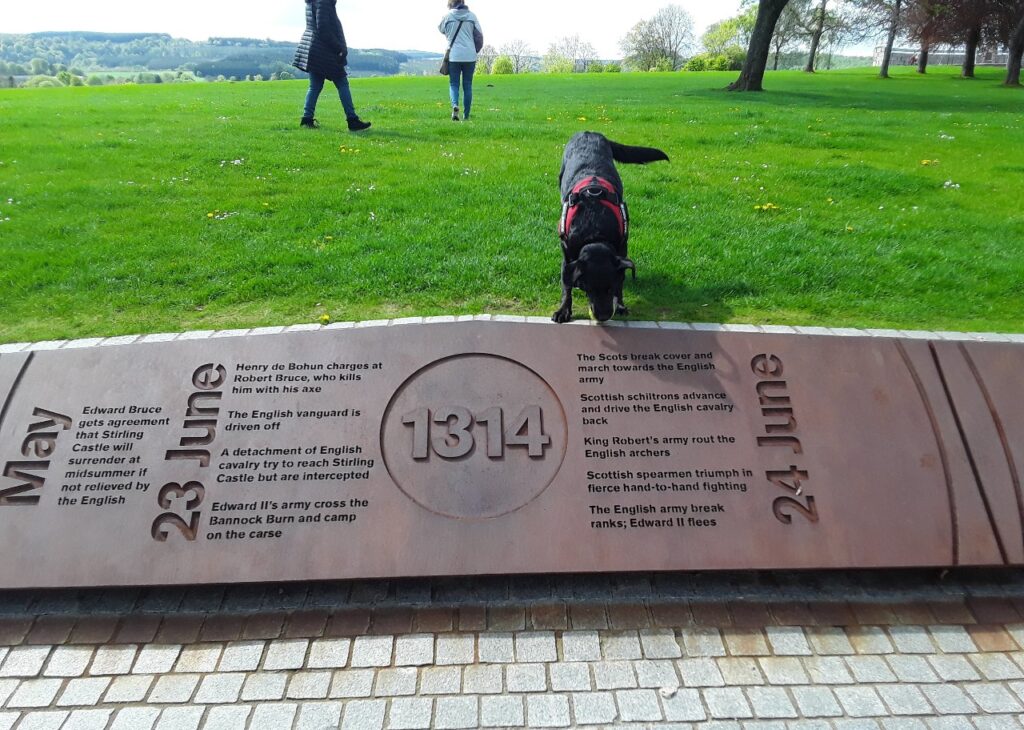
In June 1314 the English garrison at Stirling announced it would surrender to the Scots unless it received reinforcements by the 24th of the month. Edward II sent 13,000 soldiers marching north, and Bruce's army met them at Bannockburn, a winding watercourse that proved fatal for Edward. His schiltrons had learned their lesson at Falkirk.
Moving in tight formation, they fought off the English horsemen on the first day of the battle and punched a great breach through Edward's forces the next day, pinning them against the water. That was enough to break English morale and win the day.
It would take another decade for England to formally recognise Scotland's independence, and that treaty soon fell apart during the Second Scottish War of Independence, which began in 1332.
Today
Like Falkirk, the exact site of the Battle of Bannockburn is lost to us. Even so, this historic place, which marked its 700th anniversary in 2014, remains one of Scotland's must-see landmarks.
The Battle of Bannockburn Experience project asks: "How do you tell the story of Bannockburn in the absence of any archaeological evidence?"
The answer? 3D technology. Visitors to Bannockburn can stand shoulder to shoulder with Scottish warriors thanks to the wonders of motion capture. Tickets can be booked online.
How to find it: Bannockburn is two miles southeast of Stirling. Turn off the M80/M9 at junction 9 onto the A872.
Killiecrankie, 1689
By the 17th century, England and Scotland were ruled by a single king. In 1685 Charles II of England was succeeded by James II, a Roman Catholic.
A new Catholic dynasty on the throne of England and Scotland seemed beyond dispute, which enraged the Protestant population, so they called on William of Orange (the Netherlands), husband of James's daughter Mary, to cross the Channel and take the throne. By 1689 this "Glorious Revolution" had come to pass, but for many of James's supporters the fight was far from over.
At the head of the Jacobites in Scotland ("Jacob" is the Latin name for James) stood Viscount Dundee, John Graham of Claverhouse. He gathered a force of 2,400 men, including 240 Cameron Highlanders, and clashed with the government troops of General Hugh Mackay north of the steep, wooded gorge of Killiecrankie.
Dundee drew his men up on a ridge and waited for the favourable light at the end of the day, then sent his Camerons charging down in the famous "Highland charge," too swift for the government troops to fix their bayonets in time.
It was a rout: 2,000 of Mackay's 3,500 men were killed and the rest fled, but, unluckily for the Jacobites, Dundee was mortally wounded by a stray musket ball. Without its dynamic leader, the movement lost momentum and never recovered.
Today
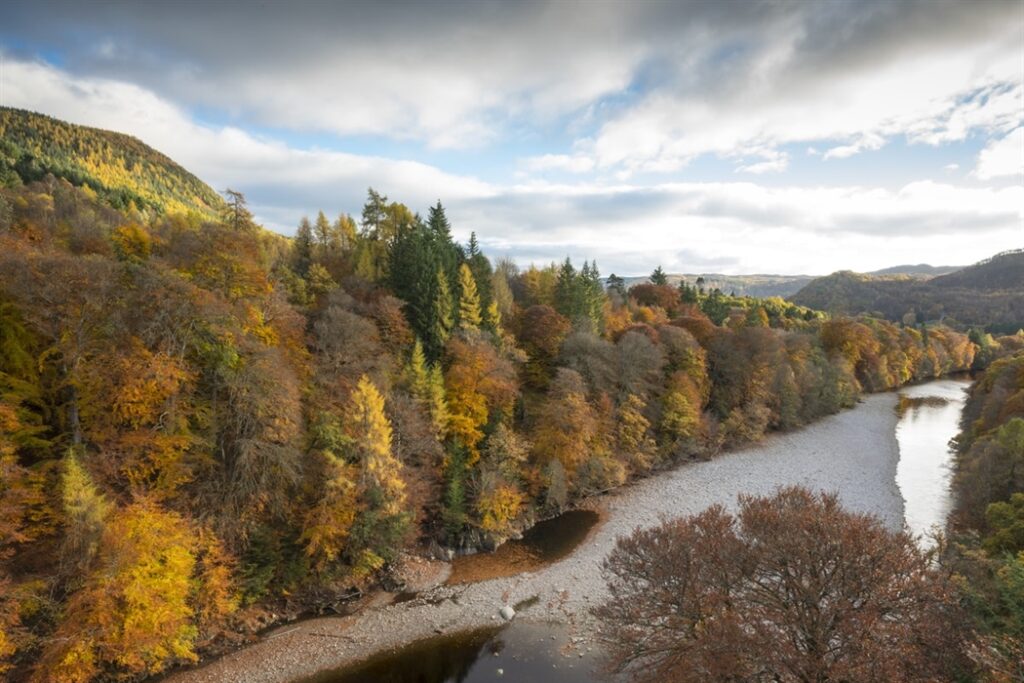
The Pass of Killiecrankie, a great gorge in the mountains north of Pitlochry, cloaked in ancient forest and washed by a river, is a glorious corner of Scotland and perfect for exploring the Highlands. The Killiecrankie Visitor Centre is open (admission free) from April to October.
How to find it: Killiecrankie is three miles from Pitlochry, which is less than two hours by train from Edinburgh. A bus runs between Pitlochry and Killiecrankie, though there are walking trails laid out across the area too.
Glencoe, 1692
A bloody past, but a promising future in tourism. The events of 13 February 1692, less a battle than a massacre, are among the most infamously remembered in Scottish history.
After the Jacobites' defeat, William demanded oaths of loyalty from the Scottish clans, ordering them to appear before a magistrate by 1 January 1692.
Because of bad weather and treachery, Alasdair MacIain of the MacDonalds of Glencoe was nearly a week late in signing. His enemies, including John Dalrymple, Secretary of State for Scotland, and senior members of the Campbell clan, hatched a plot to destroy him. They declared MacIain's signature improperly made, branded the MacDonalds untrustworthy and secretly plotted their punishment.
On 12 February a secret order reached the troops who had been enjoying the MacDonalds' hospitality: "You are hereby ordered to fall upon the rebels... and put all to the sword under seventy." The next day 38 MacDonalds were killed by their own guests.
Under Scottish law this was a horrifying crime, "murder under trust," and the subsequent inquiry found Dalrymple guilty. But thanks to William's reluctance to pursue the matter, he and all those involved managed to escape punishment.
Today
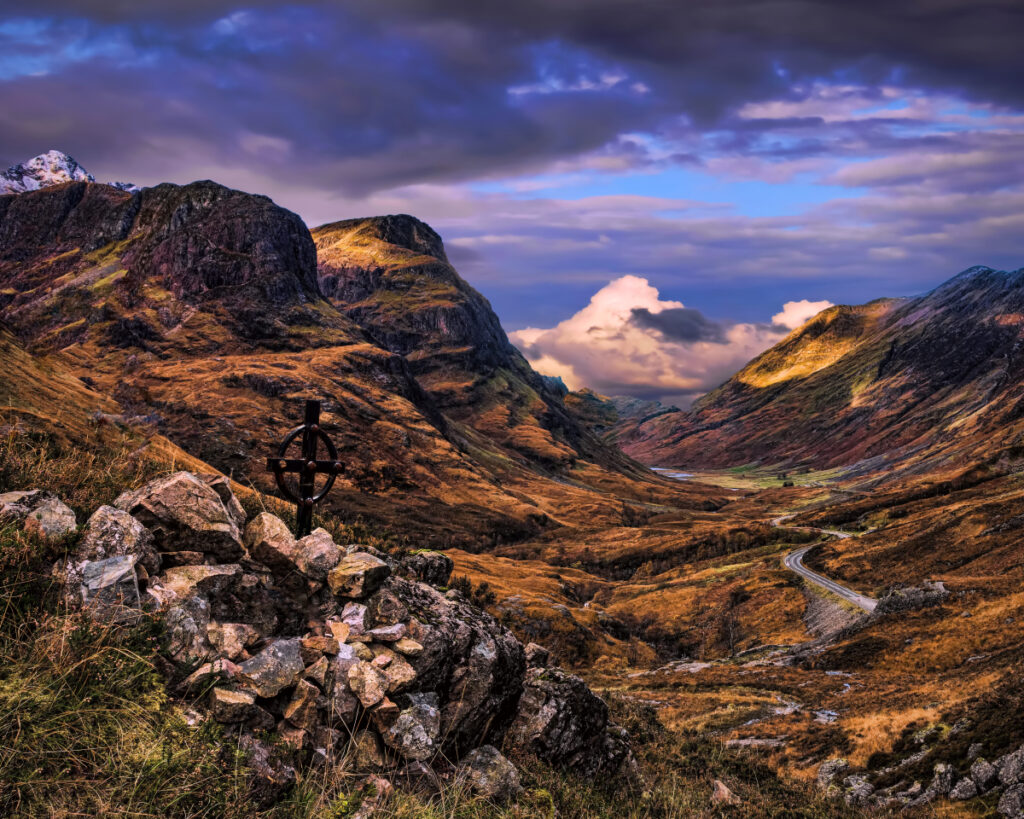
Glencoe is one of Scotland's most celebrated corners: an ideal place for climbing, exploring, skiing and escaping Bond villains. It is here, and in neighbouring Glen Etive, that Daniel Craig's Bond and Judi Dench's M take refuge in the film Skyfall.
Why not follow in their footsteps? Make your way through the mist to Glencoe, park your Rolls Royce, gaze up at the mountains and let your jaw drop. In Glencoe you can stay right in the glen itself at a mountain resort or at one of the local hotels, or you can head to nearby Fort William or Fort Augustus, the gateways to the Western Isles.
How to find it: Glencoe is just under three hours' drive from Edinburgh and just over two hours from Glasgow. It makes a perfect stop on an island-hopping trip.
Culloden, 1746
The events at Glencoe lingered long in Scottish memory, and by 1745 they had found a champion for their anti-British dissent: Charles Edward Stuart, better known as "Bonnie Prince Charlie."
After a failed attempt to seize and hold the north of England, Charles led his army into northern Scotland, won a major battle at Falkirk and laid siege to Stirling Castle until reinforcements arrived.
Short of money and resources, Charles decided to fight the English on Drummossie Moor, near Inverness. Each side chose its own tactics: the government troops relied on their firearms, while the Jacobites used the Highland charge, a brave but unsuitable tactic for open, boggy terrain.
Within an hour, 1,500 to 2,000 Jacobites were killed or wounded, and thanks to an order to "give no quarter," the wounded were put to death over the grim hours and days that followed.
The aftermath of Culloden was tragic: the British campaign of suppression ground Scotland down under British rule, stripping Scottish landowners of their rights and banning the wearing of tartan.
Today
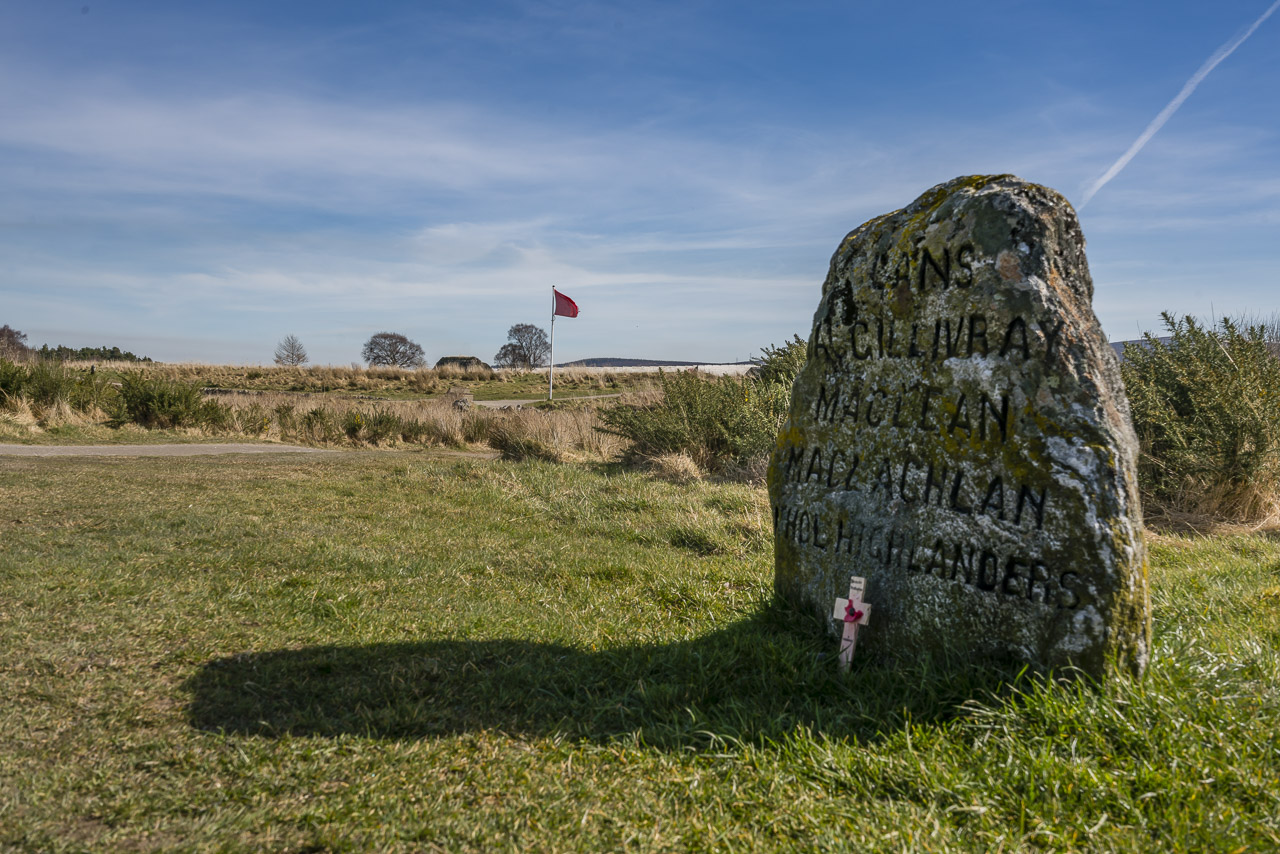
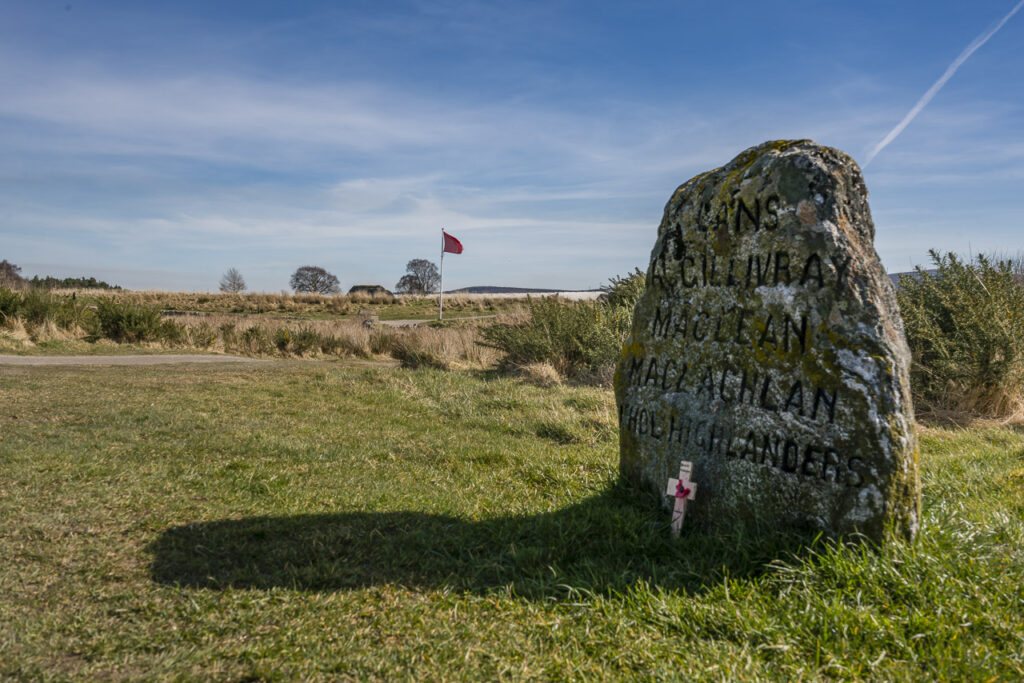
Culloden is one of Scotland's most emotionally powerful sites: a bleak stretch of scrub-covered moor a ten-minute drive from Inverness, all but empty save for the new Visitor Centre (opened in 2007) and the gravestones and memorial cairn of 1858.
This place is a reminder both of the historic injustice done to Scottish culture and of its ultimate resilience in the face of adversity.
It is also worth heading west to visit Glenfinnan, the spot where Bonnie Prince Charlie raised his royal standard and launched the Jacobite rising. The Glenfinnan Monument stands on the shore of Loch Shiel in the Lochaber district of the Highlands.
In recent years the site has also gained fame as the Black Lake in the Harry Potter films. The nearby Glenfinnan Viaduct also features in the series, a celebrated marvel of Victorian engineering that the Hogwarts Express crosses twice a year.
How to find it: Culloden is close to Inverness, three hours' drive north of Edinburgh, and it is served regularly by train, which also passes through Pitlochry.