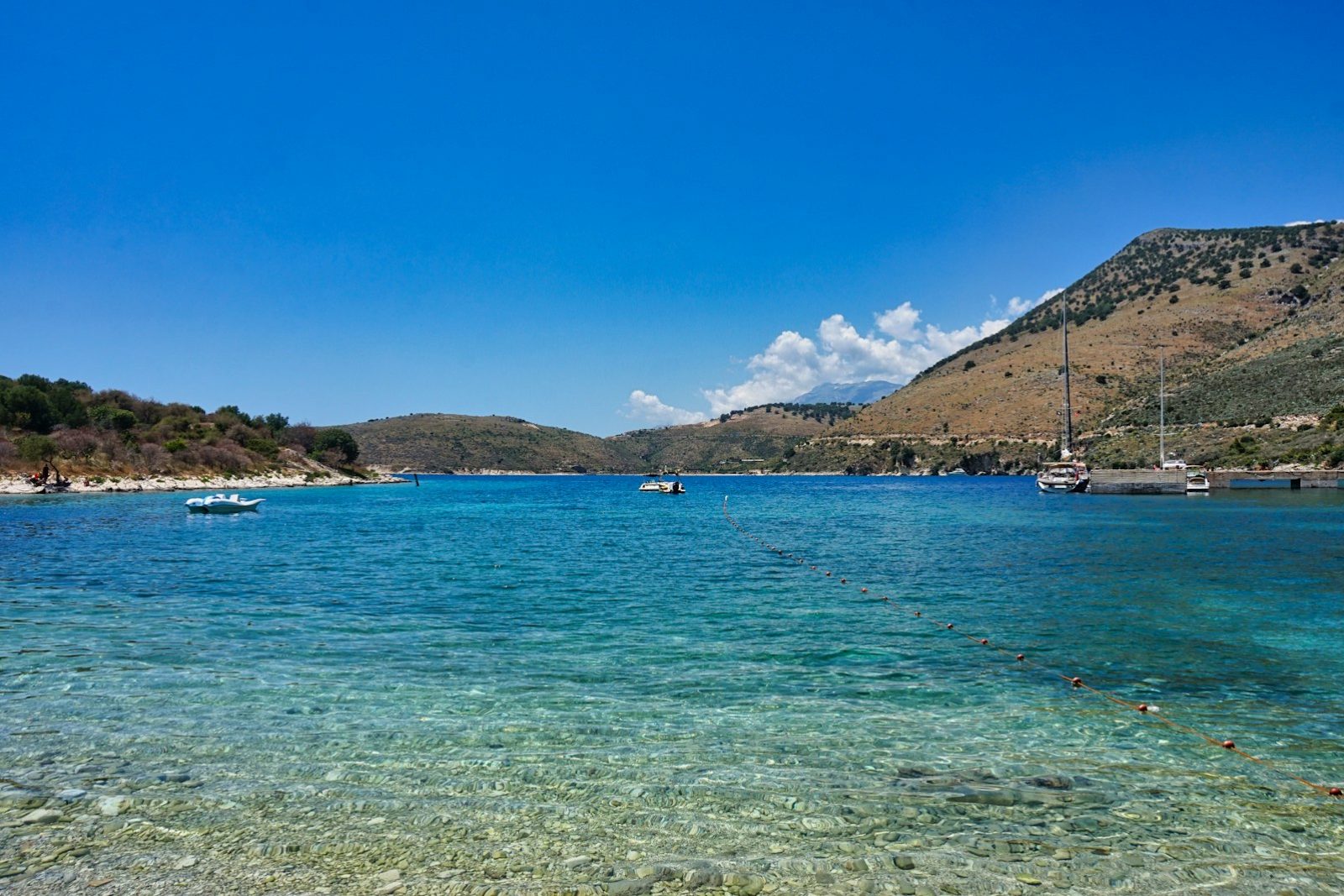


The short answer to what to see in Albania on a single trip is this: two very different countries rolled into one, the turquoise coast of the Riviera around Saranda and Ksamil, and the stone Ottoman towns in the mountains, Berat and Gjirokaster. Tirana is not the main goal here, more of a front door and a transfer point.
The main reason to go right now is simple. For the same money that buys you a single week in Croatia or Greece, Albania stretches into a noticeably longer trip. Prices for lodging, food and beaches are still lower than the Adriatic neighbours, although the gap narrows every year. Below are the specifics: what is a must, how much time to budget, and where it is easy to overestimate your own stamina.
Why is the Albanian Riviera called a budget Mediterranean?
The Albanian Riviera is the southern stretch of coast running roughly from Vlora to Saranda, where the Ionian Sea offers the same crystal-clear water as Greek Corfu just across the way, but without the Greek prices. This is the country's main beach region and the first thing people come for in summer.
Partner links: booking through them supports the blog at no extra cost to you.
Saranda as a base for the whole south
Saranda is a compact resort town on a bay, an easy launchpad for day trips out and back. On foot or by local transport you can reach most of the southern sights from here, so plenty of travellers settle in for a few nights and get around without a car.
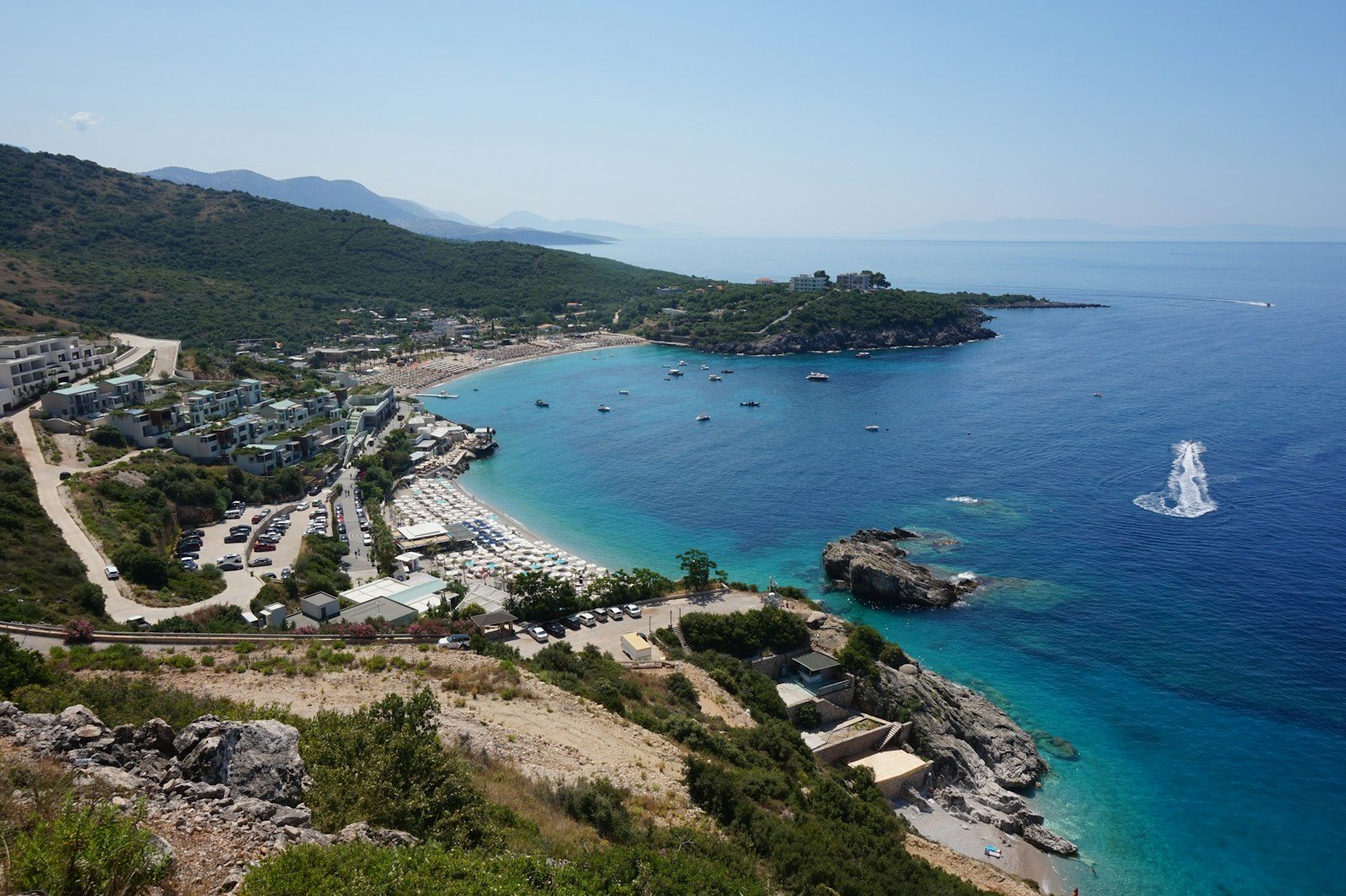
The honest downside of Saranda is known in advance: the town itself is fairly chaotic, full of half-finished concrete blocks, and you should not expect a glossy postcard. Its value is in logistics and affordable prices, not in the architecture. For real beauty you head further along the coast, to coves like Dhermi or Gjipe.
Ksamil: the same turquoise, but with crowds at peak
Ksamil, half an hour south of Saranda, has the most famous beaches in the country, with tiny islets a hundred metres offshore. The water really is the colour of an advert, and it is exactly these shots that most often talk people into visiting Albania.
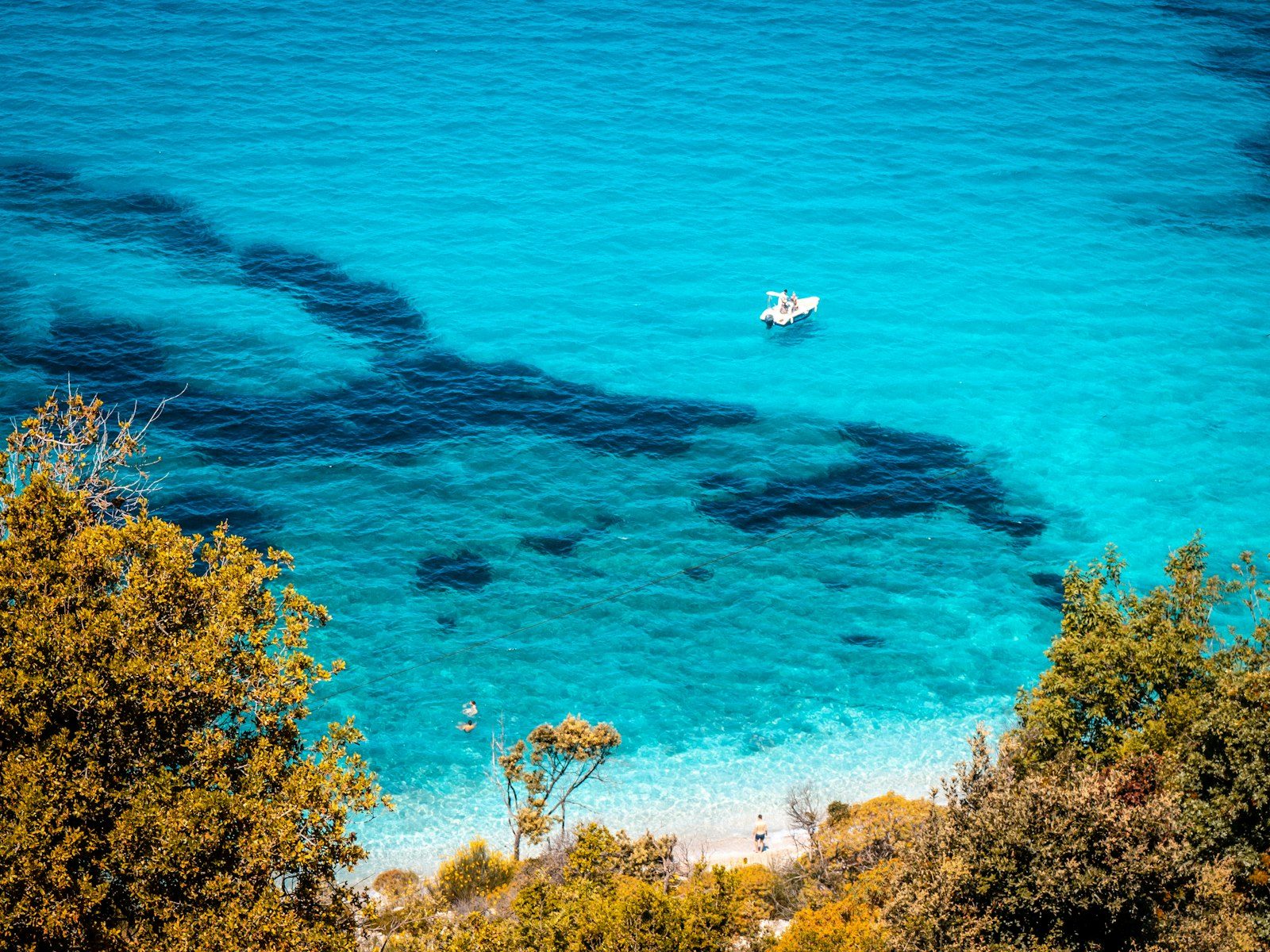
There is one problem, but it is a big one: in July and August the central beaches of Ksamil are packed with sunbeds edge to edge, and getting into the water is sometimes a paid affair thanks to private bars. The workaround: grab a kayak or a pedalo and paddle out to a far islet, or turn up before nine in the morning while the beach is still half empty. Who will not enjoy Ksamil: anyone chasing a wild, secluded cove, because in season this is more of a lively resort than a quiet idyll.
The Blue Eye and Butrint: two trips that are not about the beach
Near Saranda there are two strong non-beach spots. The Blue Eye (Syri i Kalter) is a karst spring with water of an unbelievable blue-turquoise shade, whose depth has still not been precisely measured. Swimming is not officially encouraged, and the water is icy all year round, so it is more of a spectacle than a beach.
Butrint is an ancient ruin on a peninsula in the middle of a lagoon, Albania's first entry on the UNESCO list (from 1992). Here Greek, Roman and Byzantine cities lie layered one over another: a theatre, basilicas, mosaics, a Venetian fortress up top. Budget a couple of hours for an unhurried walk, ideally in the morning or towards evening, as there is little shade on the open site.
Berat: why is the town of a thousand windows worth a whole day?
Reducing what to see in Albania to just the beach would be a mistake: Berat is precisely the reason to tear yourself away from the sea and head inland. It earned the nickname town of a thousand windows thanks to the rows of white Ottoman houses that climb the slope above the Osum River in tiers, and the view really is recognisable at first glance.
Berat's historic centre, together with Gjirokaster, is inscribed on the UNESCO list (Gjirokaster since 2005, Berat added in 2008). The main draw here is not the museums but the fabric of the town itself: the Mangalem and Gorica quarters on the two riverbanks, joined by an old bridge, and above them the living Kala fortress, inside whose walls people still live and Byzantine churches still stand. Within the citadel, look for the works of the icon painter Onufri, of the local sixteenth-century school.
A practical detail: Berat slots neatly into the route between Tirana and the south, roughly halfway. One full day or an overnight stay is quite enough to walk both quarters and climb up to the fortress. Who might find it underwhelming: if you came purely for the beach, a mountain town with no sea can feel like an unnecessary detour.
Gjirokaster: what does the stone town offer beyond its fortress?
Gjirokaster is called the stone town, and that is no metaphor for the sake of prettiness: the roofs of the houses here are laid with grey stone slabs rather than tiles, which is why the town seems to merge into the mountainside. This is the second half of the same UNESCO site as Berat, but its character is completely different.
Above the town stands one of the largest fortresses in the Balkans, with a gallery of old weaponry and a view over the valley. Below stretches an old bazaar with workshops, and among the typical tower-houses (kulla) a few are open as museums, and it is these that give the best sense of how a wealthy Ottoman family lived. Gjirokaster fits logically into one route with Saranda, since it sits roughly an hour's drive up in the mountains on the way inland.
An honest note about the terrain: the streets here are steep and paved with slippery stone, awkward to walk down in the rain, so comfortable shoes matter more than pretty ones.
Is Tirana worth your time?
Tirana is almost always the point of arrival and departure, and there is no need to linger there for long. One day is enough to get a feel for the capital: the central Skanderbeg Square, the colourful facades of the surrounding quarter, the Dajti cable car up the mountain above the city, and the Bunk'Art museum inside a Soviet-Albanian nuclear shelter, which gives an unflinching look at the years of Hoxha's dictatorship.
The smart approach is this: fly in, spend the night in Tirana, and in the morning set off south through Berat to the sea. Keeping the capital as a separate major goal of the trip is not worth it, as it loses out to both the coast and the stone towns.
When should you go to Albania, and when is it better to hold off?
The beach season on the Ionian coast runs roughly from May to October, but not every month is equal. July and August give you the warmest water, but that is exactly when Ksamil is packed, lodging prices jump up, and the mountain towns are baking hot.
The smartest compromise is late May, June and September: the sea is either already or still warm, the crowds are thinner, and prices are below the peak. In winter the coast empties out and many family-run hotels and restaurants in Ksamil are simply closed, so heading south for the beach off-season makes little sense, though Berat and Gjirokaster can be visited all year round.
| Period | Weather and sea | Prices and crowds |
|---|---|---|
| May, June | Warm, the sea is heating up, green | Moderate prices, quiet beaches |
| July, August | Heat, the warmest water | Peak prices and crowds, Ksamil packed |
| September | Warm sea, softer sun | Prices ease off, the best balance |
| November to March | Cool, rain on the coast | Cheap, but the southern resorts are closed |
Prices and dates here are approximate and change every year, so before booking be sure to double-check the specific figures before your trip on up-to-date lodging platforms.
Do Ukrainian citizens need a visa for Albania?
No. A citizen of Ukraine enters Albania visa-free on a foreign passport and may stay as a tourist for up to 90 days within any 180. By a separate decision of the Albanian government, Ukrainians are allowed to enter and stay without a residence permit until 30 March 2027, which is handy for anyone planning a longer trip.
Your passport should be valid with some margin (roughly at least three months after entry, and preferably more), and at the border you may be asked for proof of accommodation and a return ticket. Since visa rules and terms are updated periodically, double-check the current conditions before your trip on the website of the Embassy of Ukraine in the Republic of Albania (albania.mfa.gov.ua). The country's currency is the lek, but along the coast euros are accepted almost everywhere, so it is convenient to bring small cash in euros.
| Place | Why it is worth it | How much time to budget |
|---|---|---|
| Ksamil | Best beaches, islets, turquoise water | 1-2 days as a base |
| Butrint | Ancient UNESCO ruin, theatre and mosaics | 2-3 hours |
| The Blue Eye | Karst spring of an unbelievable colour | 1-1.5 hours |
| Berat | Town of a thousand windows, living fortress, UNESCO | 1 day or an overnight |
| Gjirokaster | Stone town, fortress, old bazaar | Half a day to a day |
| Tirana | Capital, Skanderbeg Square, Bunk'Art | 1 day |
A ready-made backbone for a week-long route
Once you have decided what to see in Albania, all that is left is to stitch the points into one convenient route. The logical loop looks like this. Arrive in Tirana and stay overnight, the next morning head south with a half-day stop in Berat. Then move on to Saranda or Ksamil and spend three or four days on the coast with trips out to Butrint, the Blue Eye and the beaches. On the way back, work in Gjirokaster, which is almost right on the road, and return to Tirana.
What to cut if you have only four or five days: leave Tirana for arrival and departure, take Berat along the way, and focus on Saranda with Ksamil and Butrint, saving Gjirokaster for next time. The main beginner mistake here is the same as in the Balkans generally: underestimated mountain distances, where the map says an hour but in reality it is an hour and a half because of the switchbacks.
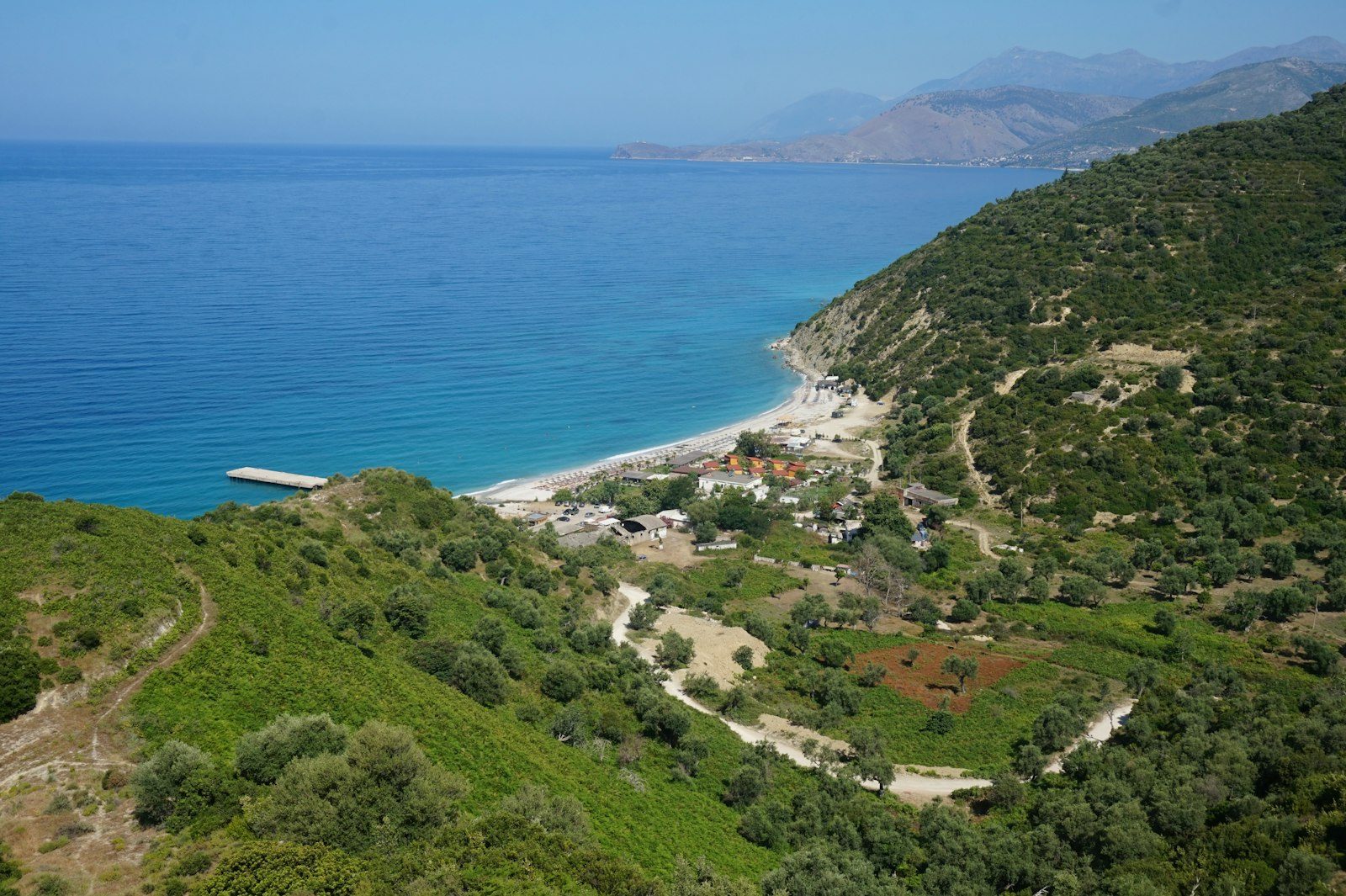
If you are going for the first time, take the combo of Ksamil plus Butrint plus Berat, which covers both the sea and the culture without rushing. If you have already been to Albania and want something less obvious, aim for the wild coves of the Riviera (Dhermi, Gjipe, Porto Palermo) and the Llogara Pass with its view over the whole coast from above, something many people come back for on its own.